
Orejen SmallFarmer
Our field-tested and proven mobile smart technology for smallholder farming offers comprehensive digitization of farms, unparalleled transparency and traceability, and easy data sharing for increased efficiency, productivity, and quality. Integration with Nexusl allows for limitless local smallholder supply chains.
Field Tested
Is a field-tested, proven mobile smart technology.
Digitisation
Offers the digitisation of smallholder farms, including mapping and all core farming activities.
Transparency & Traceability
Provides unparalleled transparency and traceability to origin in real-time.
Open & Sharable Data
Allows farm data to be easily shared within local cooperatives, with local industry, with buyers or aggregators, and for compliance and certification.
Increased Farmer Returns
Data analytics leads to increased farmer returns through improvements in productivity, efficiency gains, and improved quality, from reduction/removal of pesticides, reduced fertiliser usage, and optimised farm management.
Unlimited Potential
When integrated with Nexusl, an unlimited number of smallholder farmers can be aggregated to build a limitless local smallholder supply chain.
“Knowledge is power. Information is liberating. Education is the premise of progress, in every society, in every family.”
— Kofi Annan
Barriers for Smallholder Farmers
The Orejen Foundation has identified several challenges faced by smallholder farmers in their efforts to compete in larger markets. One major challenge is the lack of scale, which makes it difficult for individual farmers to access higher-paying markets. This means that they are often limited to selling their products in lower-paying local markets. Another issue is the non-standardized product, which can lead to non-conformance or quality issues that are common among smallholder farmers.
Traceability is also lost once the product is aggregated at the “farm gate,” and farmer scale and manual paper records make compliance and certification costly and out of reach. Additionally, largely paper transactions with buyers mean there is no digital history of transactions, making it difficult to track and analyze trends. The coordination of smallholder farmers can also be cumbersome and challenging.
Transparency is also a significant concern, with little to no transparency at the farm level. Finally, excessive pesticide and fertilizer usage is encouraged by suppliers, increasing production costs for smallholder farmers. Our nonprofit recognizes the challenges faced by smallholder farmers and is committed to finding ways to address these issues and help these farmers access larger markets.
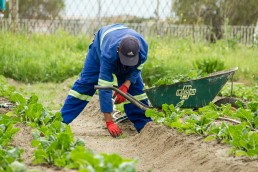
The Orejen Foundation understands the challenges that smallholder farmers face globally.
Overcome the pain points for Smallholder Farmers and Supply Chain Partners
The Orejen Foundation recognizes the potential of smallholder farmers to access larger markets and compete more effectively. To achieve this, we aim to aggregate unlimited smallholder farmers to create efficient supply chains that can access higher-paying markets. We prioritize ensuring standardized farming practices and farm produce, which can reduce or eliminate non-conformance or quality issues.
Traceability to origin is a critical concern for our nonprofit. We work to ensure traceability so that consumers can have confidence in the supply chain. By creating a “paperless” smallholder supply chain, we can reduce certification and other supply chain costs. Our goal is to use digital transactions to create a digital history of all producer data, allowing analytics to drive continuous improvement.
Our nonprofit recognizes the importance of coordinating smallholder farmers and streamlining the process to make it more efficient. We aim to increase trust and confidence in the supply chain by providing full real-time transparency at the farm level. Finally, we strive to reduce or eliminate pesticide usage and optimize fertilizer usage and other farm practices to reduce production costs and increase returns. Through these efforts, we believe that smallholder farmers can compete in larger markets and access greater opportunities.